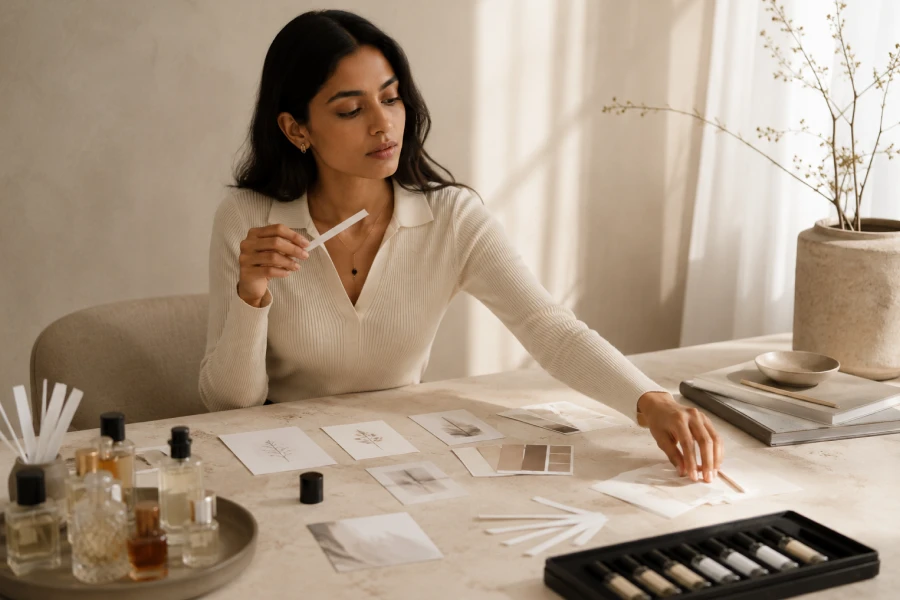
Finding your signature scent begins with noticing what already feels familiar. Perfume can become part of your daily presence without needing to announce itself. It may remind you of open windows, fresh linen, warm skin, green leaves, quiet evenings, or a favorite place. The most personal fragrance often connects to an emotional response before it connects to a note list. You do not need expert language to begin. You only need curiosity and a little patience. Pay attention to the scents that make you pause. Notice the ones you keep thinking about after they fade. Those small reactions can guide you toward something that truly feels like your own.
Start outside the perfume counter. Think about the smells you enjoy at home, in nature, or during travel. You may like the brightness of citrus peel. You may love the calm of tea, rain, cotton, cedar, or warm vanilla. These preferences provide useful clues. They tell you which fragrance families may feel more natural. Do not force yourself toward notes that sound fashionable. A perfume should feel emotionally believable on you. Keep a small list of scents that you notice during the week. The patterns will become clearer over time. Your own surroundings can be the best introduction to fragrance discovery.
A fragrance changes as it develops. The first spray often feels bright and immediate. The heart notes appear after the opening fades. The drydown may be warmer, softer, or more textured than you expect. Give each scent several hours before judging it. Wear one sample at a time whenever possible. Let it return to your attention naturally rather than smelling it every minute. A thoughtful fragrance testing guide can make this process calmer. The scent that feels best after ordinary hours often has more long-term potential than the one that only impresses at first.
Fragrance becomes more personal when it joins a real routine. It may be the final step before work. It may mark the start of an evening out. It may become a small moment after a shower or before a quiet dinner. Think about when you want to feel most like yourself. Then consider what kind of fragrance supports that feeling. A clean skin scent may fit a gentle morning ritual. A soft woody perfume may feel better for evenings. The right choice should support your life rather than create a separate performance. That connection is what makes a scent feel truly personal.
Notes can be useful, but mood is often easier to understand. Ask what you want the fragrance to feel like. You may want it to feel calm, bright, grounded, sensual, focused, or comforting. One scent may feel like sunlight through curtains. Another may feel like a polished coat in cold air. A third may feel like warm wood and candlelight. These images tell you more than a long list of ingredients. Write down the atmosphere each sample creates. You may find that you prefer softness over sweetness. You may discover that freshness matters more than floral notes. Mood can be your most reliable compass.
Compliments can be enjoyable, but they should not decide the fragrance for you. People respond to perfume through their own memories and preferences. A scent that attracts attention may not feel right in your private life. The most useful question is simple. Do you enjoy catching it on yourself during the day? Does it make you feel more settled or more present? A well-chosen personal perfume guide helps you focus on that internal reaction. Your fragrance should support your confidence before it earns anyone else’s approval. Personal style is strongest when it begins from within.
Weather changes the way perfume behaves. Warm air can amplify sweetness and projection. Cooler weather can soften delicate notes and deepen woody ones. Test promising fragrances across more than one kind of day. You may not need a completely different scent for every season. You may only need to adjust the number of sprays. A fragrance can feel lighter when applied sparingly in summer. It can feel warmer and more enveloping in winter. Notice how your skin responds in different conditions. Seasonal awareness helps you enjoy the same scent more fully. It also prevents a favorite perfume from feeling overwhelming.
Fragrance has a powerful relationship with memory. A certain note may recall a childhood garden, a hotel lobby, a loved one’s sweater, or a city you miss. These associations are not always obvious at first. Sometimes a scent creates a feeling before it creates a picture. Pay attention when that happens. It may show you what kind of atmosphere you value most. You might be drawn to freshness because it feels hopeful. You might love warmth because it feels safe. Let those responses guide your testing. The best signature scent often has emotional depth without feeling nostalgic or heavy.
You do not need to wear exactly one perfume forever. A signature can be a shared mood rather than one bottle. You may have a bright daytime scent, a deeper evening scent, and a softer option for quiet days. The connection can come from a common material or feeling. Perhaps all three feature clean woods. Perhaps they share a warm skin-like softness. A useful signature scent resource can help you identify that thread. This approach gives you variety without losing your sense of identity. Your perfume wardrobe can evolve while still feeling recognizably yours.
The final choice should feel simple after enough testing. You should want to wear it again without needing a special reason. It should feel good when you are alone, not only when you are seen. It should sit comfortably beside your clothes, habits, and environment. A signature scent does not need to be dramatic. It simply needs to create a feeling you want to return to. Trust the fragrance that keeps inviting you back. Over time, it will collect memories of its own. That is when perfume becomes more than an accessory. It becomes part of your personal language.



Leave a comment